Tuesday 29 Sep 2026
Trespass causes 90 days’ worth of delays in the West as rail industry launches crime crackdown
- Region & Route:
- Wales & Western: Great Western
- | Wales & Western
- More than 1,300 trespass incidents were recorded across Network Rail’s Great Western route in 2025/26
- Combined, these incidents caused almost 130,000 minutes of delays, equivalent to around 90 days
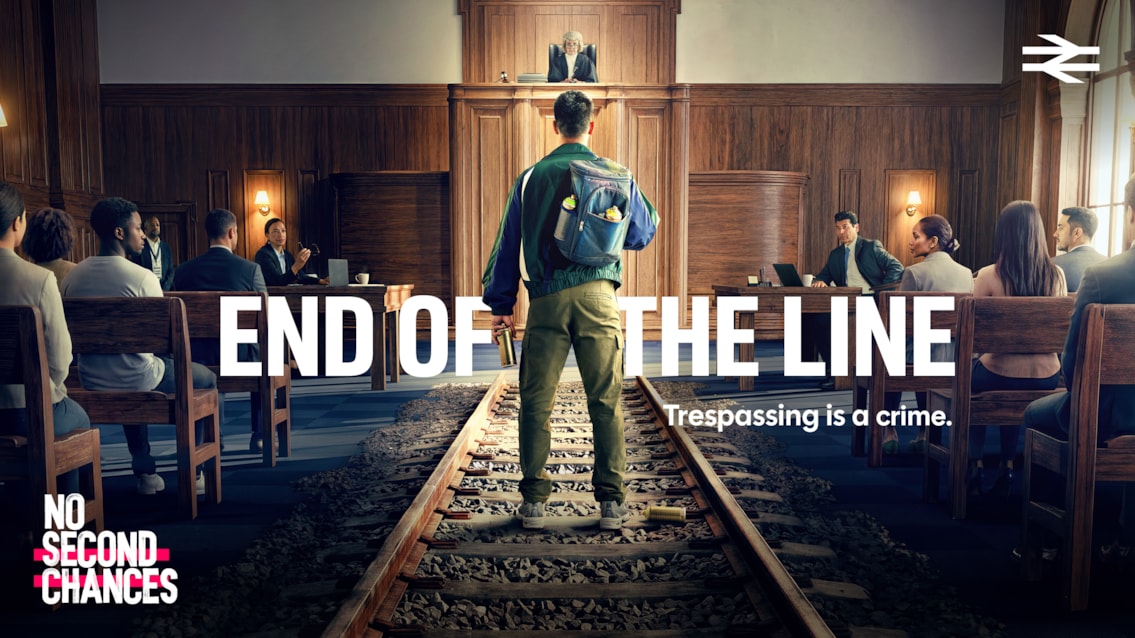
- Rail industry and British Transport Police launch new campaign warning that railway crime has serious consequences
New figures released today reveal that trespass caused almost 130,000 minutes of delays to passengers and freight services across Network Rail’s Great Western route last year.
A total of 1,328 trespass incidents were recorded across the route, which runs from London Paddington to Bristol and the South West. Together, these incidents caused 129,802 minutes of delays – equivalent to 90 days – and resulted in around £8.2 million in delay costs throughout 2025/26.
Although the number of incidents in the West fell by 5% compared with the previous year, trespass remains one of the railway’s biggest causes of disruption and can have a significant impact on train performance, passengers, freight services, and local communities. It can also require a substantial industry response from the emergency services and railway staff, places the trespasser and others at risk, and comes with a considerable financial cost.
In response, the rail industry and British Transport Police (BTP) have today launched a new campaign to make sure potential offenders are aware they will face the full force of the law if they commit crimes on the railway. The campaign, named Crime with Consequences, warns that criminal activity – including graffiti, vandalism and cable theft – can result in severe fines or prison sentences.
Alongside trespass, the new figures released today also show that there were 92 recorded incidents of vandalism and deliberate obstruction (such as placing items like rocks on the tracks) on the Great Western route last year, leading to almost 6,500 minutes of delay. While this marks a 20% decrease from the previous year, the cost to the railway industry was still significant – £383,000 in delay payments.
Marcus Jones, Great Western Route Director at Network Rail, said:
“Trespassing on the railway is extremely dangerous and can have serious consequences, not only for the people involved but for the thousands of passengers and freight services that rely on our network every day.
“We take railway crime incredibly seriously and work closely with British Transport Police to identify offenders and bring them to justice. As part of these efforts, we’re improving evidence collection to support prosecutions, making greater use of victim impact statements, and using new technology such as smart CCTV to help tackle crime across the railway.
“This new campaign reminds potential offenders that trespass on the railway is a criminal act and could result in serious fines and even imprisonment. Anyone who witnesses any trespass incidents is encouraged to report what they’ve seen to BTP via the text service on 61016.”
Charlotte Murray, Head of Security and Resilience at GWR, said:
"Our customers rightly expect a safe and reliable service, and incidents of trespass and other criminal activity can lead to delays and disruption across the network.
"As an industry, we are united in our determination to reduce these incidents, protect those at risk and minimise the impact on passengers. Every disruption avoided helps keep our customers moving and improves the reliability of the railway on which they depend."
Superintendent Darren Malpas, of British Transport Police, said:
“Cable theft and associated railway crimes like trespass aren’t victimless offences. They put lives at risk, cause significant disruption to passengers and freight services, and cost the rail industry millions of pounds every year, which ultimately ends up costing the public more.
“This important campaign highlights both the dangers and consequences of criminal activity on the rail network. Those involved must understand that railway infrastructure is extremely dangerous. Anyone trespassing on the railway or attempting to steal cable risks serious injury or death.
“Through closer collaboration, improved intelligence, new technology and stronger evidence gathering, we’re working tirelessly to identify offenders, bring them to justice and protect the communities and passengers who rely on the railway every day.”
Rail Minister, Lord Peter Hendy, said:
"Trespassing causes delay and frustration for thousands of passengers every year and stops people going about their daily lives. Anyone doing this on the railway is also putting themselves at serious risk of injury or death.
"It is great to see the rail industry come together with British Transport Police to make it absolutely clear that trespassing on the railway is a criminal offence. Make no mistake, offenders will be brought to justice quickly, helping to reduce disruption across the network and keep passengers moving.”
The campaign forms part of the wider rail industry's efforts to reduce trespass and railway crime and is part of the existing No Second Chances safety programme.
Notes to Editors
- Network Rail’s Western route recorded 1,328 trespass incidents in 2025/26, compared with 1,399 in 2024/25.
- These incidents caused 129,802 minutes of delay, compared with 149,251 minutes in 2024/25.
- Delay costs are the amount of money publicly owned Network Rail provides to train operators to compensate for delays related to its tracks, known as Schedule 8 costs.
- The associated Schedule 8 cost was approximately £8.23 million, compared with £10.54 million in 2024/25.
- The Great Western route recorded 92 vandalism and obstruction incidents in 2025/26, causing 6,456 minutes of delay and approximately £383,000 in delay costs. There were 115 such incidents in 2024/5, leading to 8,685 delay minutes and just over £500,000 in delay costs.
Contact information
Passengers / community members
Network Rail national helpline
03457 11 41 41
Latest travel advice
Please visit National Rail Enquiries
Journalists
Emily Maiden
Network Rail
Emily.Maiden@networkrail.co.uk
About Network Rail
We own, operate and develop Britain's railway infrastructure; that's 20,000 miles of track, 30,000 bridges, tunnels and viaducts and the thousands of signals, level crossings and stations. We run 20 of the UK's largest stations while all the others, over 2,500, are run by the country's train operating companies.
Usually, there are almost five million journeys made in the UK and over 600 freight trains run on the network. People depend on Britain's railway for their daily commute, to visit friends and loved ones and to get them home safe every day. Our role is to deliver a safe and reliable railway, so we carefully manage and deliver thousands of projects every year that form part of the multi-billion pound Railway Upgrade Plan, to grow and expand the nation's railway network to respond to the tremendous growth and demand the railway has experienced - a doubling of passenger journeys over the past 20 years.
Follow us on Twitter: @networkrail
Visit our online newsroom: www.networkrailmediacentre.co.uk