Wednesday 3 Jun 2026
Network Rail rolls out remotely operated drones to monitor and protect the railway
- Region & Route:
- Wales & Western: Great Western
- | Wales & Western
Network Rail, in partnership with heliguy™, has secured approval from the UK Civil Aviation Authority (CAA) to operate drones beyond the operator’s line of sight (BVLOS), marking a significant step forward in the use of remote aerial technology across the rail network.
The authorisation enables Network Rail’s Western and Anglia routes to deploy remotely operated drones at sites in Gloucester and Romford respectively, supporting infrastructure monitoring, improving situational awareness, and strengthening the response to incidents and security risks. The drones will be operated by heliguy pilots from the company's Remote Operations Command Centre in Newcastle, allowing activity to be managed without the need for personnel on site.
This development follows around 16 months of joint work to demonstrate that drone operations can be conducted safely in complex railway environments, including busy and densely populated areas. The approval has been granted under the CAA’s UK Specific Operations Risk Assessment (SORA) framework.
Ken Durling, asset engineer (track renewals) for Network Rail’s Anglia route, said: “Carrying out BVLOS operations in and around live rail infrastructure, particularly in complex and populated environments, is not something that happens quickly. This has been a sustained effort involving problem solving and close collaboration, and it shows what can be achieved when operational and regulatory expertise are brought together with a shared goal.”
Simon Gillibrand, operations director for Network Rail’s Western route, said: “This is about giving our teams better, quicker access to information so they can make the right decisions on the ground and keep trains moving safely.
“In a busy operational railway, being able to assess infrastructure remotely will help us plan work more effectively, respond faster when issues arise, and ultimately keep disruption to a minimum for passengers and freight customers.”
The capability is expected to enhance how Network Rail monitors and manages its infrastructure. By providing live aerial imagery and data, the drones will help teams respond more quickly to incidents, improve the management of disruption, and support efforts to deter trespass and criminal activity.
Richard Barke, route crime & security manager for the Anglia route, said the technology offers clear operational potential: “BVLOS capability gives us a real opportunity to close the gap between operations and infrastructure teams. Being able to see what’s happening on the ground in real time will support faster, more informed responses to incidents. While this is still an emerging capability, the potential to improve service resilience and recovery is clear.”
Liam Barrington, operations drone project manager for the Western route, said: "This approval is a game changer for Network Rail. Having our SORA application for an Atypical Air Environment (AAE) accepted means a huge step forward for our business. It will transform how our operational and route crime teams work, giving us greater control and insight across our entire network and removing the need for a boots-on-ballast approach. It has been truly inspiring to see such deep collaboration, as both teams overcame significant challenges together, and it’s amazing to see two routes come together to achieve this goal."
The system will use automated “drone-in-a-box” technology, enabling routine, repeatable flights during the working week without requiring on-site pilots. Equipped with high-resolution and thermal imaging, the drones will provide detailed data to support inspections and operational decision-making.
While the deployment at Romford and Gloucester is initially focused on trial activity, it is expected to inform wider rollout across the network. The project also provides a working example of how advanced drone operations can be integrated safely into critical national infrastructure, setting a precedent for future adoption across the rail and wider infrastructure sectors.
Notes to Editors
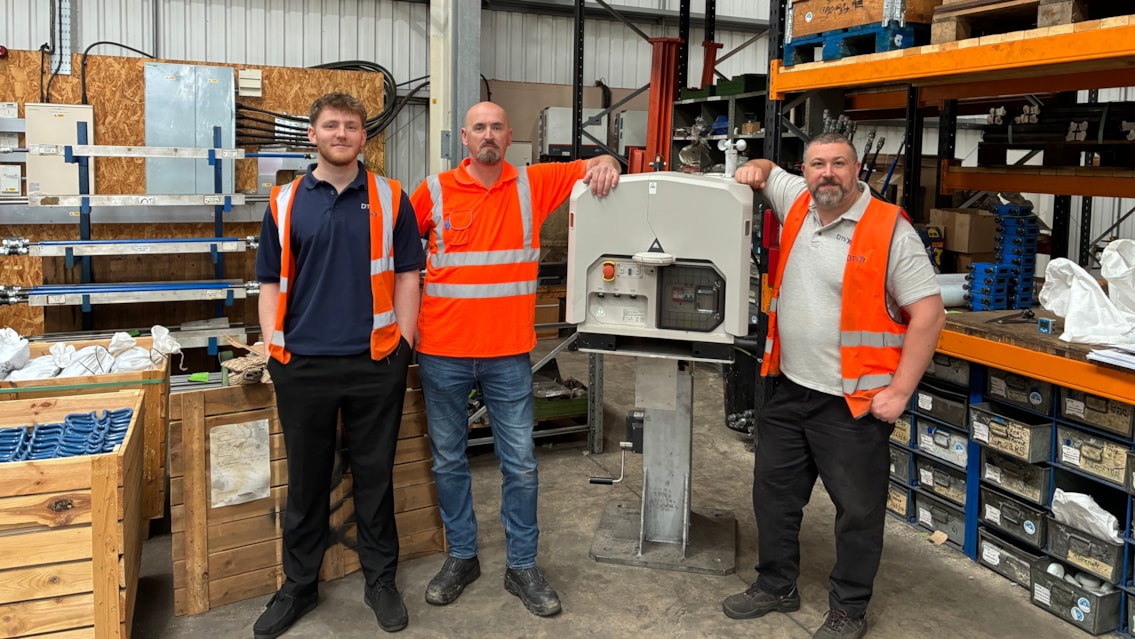
The attached images show the automated "drone-in-a-box" technology, or 'nests'.
Contact information
Passengers / community members
Network Rail national helpline
03457 11 41 41
Latest travel advice
Please visit National Rail Enquiries
Journalists
Emily Maiden
Network Rail
Emily.Maiden@networkrail.co.uk
About Network Rail
We own, operate and develop Britain's railway infrastructure; that's 20,000 miles of track, 30,000 bridges, tunnels and viaducts and the thousands of signals, level crossings and stations. We run 20 of the UK's largest stations while all the others, over 2,500, are run by the country's train operating companies.
Usually, there are almost five million journeys made in the UK and over 600 freight trains run on the network. People depend on Britain's railway for their daily commute, to visit friends and loved ones and to get them home safe every day. Our role is to deliver a safe and reliable railway, so we carefully manage and deliver thousands of projects every year that form part of the multi-billion pound Railway Upgrade Plan, to grow and expand the nation's railway network to respond to the tremendous growth and demand the railway has experienced - a doubling of passenger journeys over the past 20 years.
Follow us on Twitter: @networkrail
Visit our online newsroom: www.networkrailmediacentre.co.uk