Friday 5 Jun 2026
World Environment Day 2026: Rail industry accelerating shift towards a cleaner, greener Great British Railways
- Region & Route:
- National
On World Environment Day (Friday 5 June), Network Rail and train operators are setting out how they are helping to make the UK a world leader in clean, green rail travel by reducing emissions, improving air quality, and protecting biodiversity across the network.
Investment in renewable energy, air quality initiatives and modern trains, combined with progress on electrification and shared environmental expertise, is further strengthening rail's position as one of the nation's most scalable and effective low-carbon transport options.
Network Rail is cutting carbon across the stations it manages by investing in renewable energy, low carbon technologies and modern, energy efficient infrastructure.
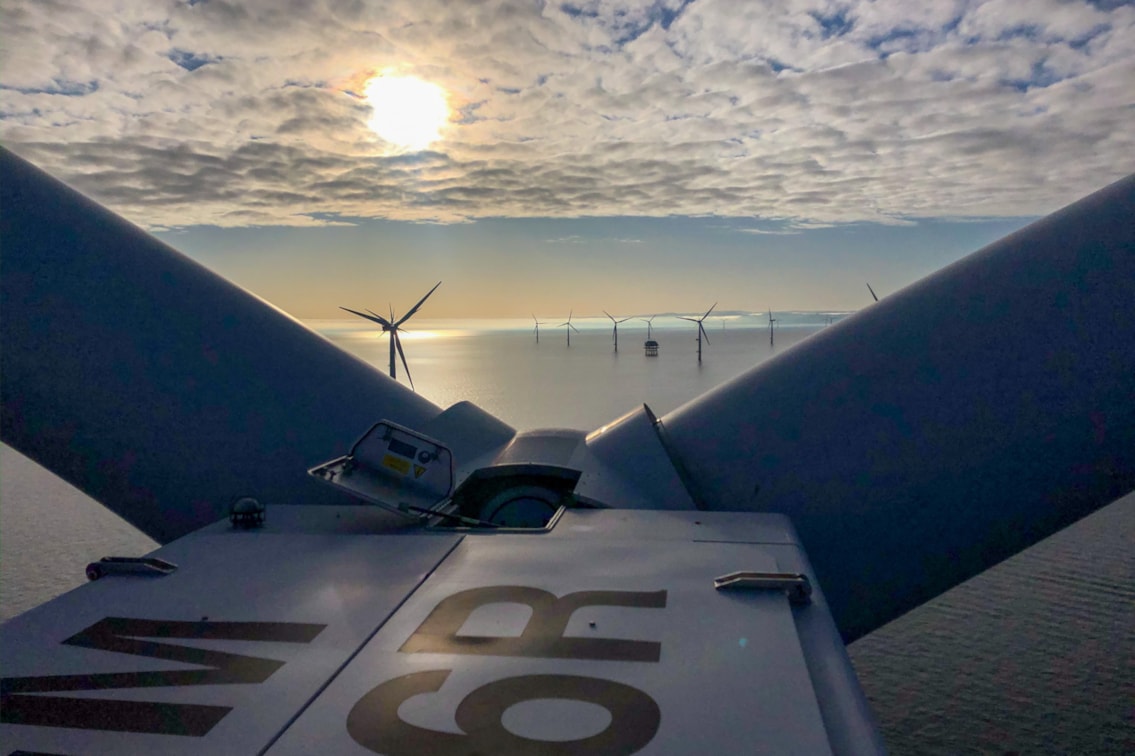
Earlier this year, it announced a landmark deal with leading renewable energy company RWE to supply around 65% of its non-traction electricity from one of its offshore wind farms. The Corporate Power Purchase Agreement (CoPPA) will deliver 300 GWh of renewable electricity annually over five years.
Under the deal, power will be supplied from RWE's Gwynt y Môr Offshore Wind Farm, located 15 miles off the coast of North Wales in the Irish Sea, which will help Network Rail reduce its carbon emissions by around 168,000 tonnes of CO₂e - the equivalent of planting 6.5 million trees.
The agreement forms a key part of Network Rail's Greener Strategy, which sets out its plans to achieve a sustainable railway, and follows a CoPPA signed with EDF Renewables in 2025, which secured 64 GWh of clean energy per year from a new solar farm currently under construction. Together, the two agreements will provide around 80% of the organisation's non-traction electricity from renewable sources, putting Network Rail firmly on track to meet 100% by its 2030 target.
In other initiatives, Network Rail has also achieved zero non-hazardous waste to landfill and begun replacing its fleet with zero emission vehicles, while also investing in low carbon innovation across its wider operations - from hybrid and battery powered maintenance vehicles to the ongoing conversion of its national road fleet to electric alternatives.
Electrification is the most powerful driver of emissions reduction on a large scale, because it enables greater uptake of electric rolling stock. This is primarily realised through the introduction of battery-passenger trains supported by partial-electrification, which can deliver electric rail services at lower cost and with less disruption than was previously considered. Further work is needed to continue the expansion of the electrified network, which is why Network Rail and operators have all advocated for national delivery.
LNER continues to champion full electrification north of Edinburgh to Aberdeen, supporting Scotland’s 2045 railway decarbonisation ambition, while TransPennine Express’ adoption of new overhead lines between Manchester Victoria and Stalybridge is already saving approximately 1,013 tCO₂e (tonnes of carbon dioxide equivalent) annually by moving from diesel to electric traction.
Across the country, train operators are also delivering local initiatives to cut carbon and support communities.
Air quality and noise reduction are also key priorities, with South Western Railway (SWR) driving targeted improvements across its network. At Bournemouth and Salisbury depots, both neighbouring residential areas, SWR has introduced track greasers, upgraded noise barriers, a no-horn policy and strict no-idling protocols to minimise noise and carbon impacts for local communities.
A further initiative is trialling the recycling and reuse of 1.126 tonnes of end-of life PPE and uniforms, supporting a more circular approach to waste.
From an energy saving perspective, through a more efficient use of their rolling stock, along with some changes to timetables, c2c has achieved an 11% reduction in CO2 emissions compared to the previous year.
Their 'Project Kestrel' - an initiative which has seen Kestrel nesting boxes installed across the c2c route - has helped the operator to support local wildlife projects while also enhancing community engagement. The project has also included the installation of webcams (to the boxes) in order to provide live streaming of nesting habits and activities, allowing the general public to observe and learn more about these fascinating birds.
Station level improvements include TransPennine Express’s push on low carbon heating technologies, including the installation of heat pumps across its network.
LNER is also rolling out Air Source Heat Pumps (ASHP) and operates its managed stations on 100% renewable electricity. At Grantham railway station, ASHP technology has delivered around a 90% reduction in winter heating energy use in its first year, alongside a 91% reduction in carbon emissions.
Combined with sustainable heating upgrades, water efficiency solutions and enhanced cycling infrastructure, these efforts create cleaner, more modern and lower carbon environments for rail users.
Meanwhile, Greater Anglia continues to focus on biodiversity across the network, including an additional 400 square metres of station garden space, the installation of more than 50 bird boxes, and the creation of 18 new gardens, in the last 12 months alone.
The operator has a Wildlife Friendly Stations accreditation scheme where volunteer station adopters are recognised by local wildlife trusts for their work to support flora, fauna and biodiversity. Over 40 stations have achieved this status, with more to follow as Greater Anglia and its partners play their part in the sustainable development of their region.
GTR has set up a Sustainability Academy for employees who will embed the principles of its new industry-aligned sustainability strategy with commitments to achieving key goals around social sustainability, emissions and the natural environment. Most recently Southern and Thameslink joined forces with Imperial College London to install a display at one of its busiest stations to highlight a live air quality feed to 6 million passing passengers a year.
WM Trains (who operate London Northwestern Railway and West Midlands Railway services) is delivering a targeted energy efficiency programme across their stations and train maintenance depots to reduce energy consumption, cut emissions and lower operating costs.
That work includes reviewing heating and cooling systems to identify improvements, optimising building management system controls to further improve energy usage, exploring opportunities to improve building fabric efficiency, conducting regular energy audits and developing options to replace gas systems with low or zero carbon alternatives.
They are also working with The Wildlife Trust, station adopter groups and other community groups to map biodiversity across their network and identify opportunities for improvement.
And as previously announced, the modernisation of rolling stock for train operators is seen as a major part of the work to underpin long term sustainability while enhancing reliability and capacity across the UK network. A selection of improvements include:
• Northern is preparing to procure up to 450 new trains (around 1,000 carriages), replacing older stock with modern, energy efficient rolling stock.
• TransPennine Express is progressing its procurement programme for up to 55 new trains (around 330 carriages) to support the Transpennine Route Upgrade.
• LNER will introduce ten tri mode long distance trains (100 carriages) capable of operating on electric, battery or diesel power, supporting greener long distance connectivity.
Meanwhile, at Greater Anglia, a more modern fleet with trains designed to use less energy and operate more efficiently across the network has contributed to a reduction in total carbon emissions by 11%. Their state-of-the-art bi-mode trains can switch from diesel to electric traction and back again, on the move, to minimise fuel usage and carbon emissions.
There are now nine train operators in public ownership: c2c, Greater Anglia, GTR (who operate Gatwick Express, Great Northern, Southern and Thameslink services), LNER, Northern, Southeastern, South Western Railway, TransPennine Express and WM Trains (who operate London Northwestern Railway and West Midlands Railway services).The next operator to move into public ownership is Chiltern Railways on Sunday 20 September 2026.
Contact information
Passengers / community members
Network Rail national helpline
03457 11 41 41
Latest travel advice
Please visit National Rail Enquiries
Journalists
Network Rail press office - National
Network Rail
020 3356 8700
mediarelations@networkrail.co.uk
About Network Rail
We own, operate and develop Britain's railway infrastructure; that's 20,000 miles of track, 30,000 bridges, tunnels and viaducts and the thousands of signals, level crossings and stations. We run 20 of the UK's largest stations while all the others, over 2,500, are run by the country's train operating companies.
Usually, there are almost five million journeys made in the UK and over 600 freight trains run on the network. People depend on Britain's railway for their daily commute, to visit friends and loved ones and to get them home safe every day. Our role is to deliver a safe and reliable railway, so we carefully manage and deliver thousands of projects every year that form part of the multi-billion pound Railway Upgrade Plan, to grow and expand the nation's railway network to respond to the tremendous growth and demand the railway has experienced - a doubling of passenger journeys over the past 20 years.
Follow us on Twitter: @networkrail
Visit our online newsroom: www.networkrailmediacentre.co.uk