Monday 24 Aug 2026
Rail service changes in Essex and east London due to dried-out clay
- Region & Route:
- Eastern: Anglia
From tomorrow, Tuesday 25 August, passengers are advised to check before they travel as GBR Anglia introduces amended timetables on the c2c route and some Greater Anglia services in Essex following record-breaking hot weather.
As a result of the sustained heat and low rainfall, the clay that sits under long stretches of the railway in Essex has dried out and shrunk, causing some issues with the quality of the track.
Safety is and will always remain the railway industry's highest priority. To keep everyone moving safely and reliably, speed restrictions and temporary timetable amendments are being applied to give passengers more certainty about services and reduce the risk of short-notice disruption.
What changes will passengers see?
Timetable changes will come into effect on the c2c route on Tuesday 25 August and on the Greater Anglia line between Southend Victoria and London on Tuesday 1 September.
Some journeys will take 2–8 minutes longer than usual, with slightly adjusted departure and arrival times.
Passengers should check their specific journeys before they travel at c2c-online.co.uk and greateranglia.co.uk
While speed restrictions are currently not affecting Elizabeth line services, customers are advised to check the TfL Go app or tfl.gov.uk for the most up-to-date travel information before starting their journey.
Engineers are closely monitoring track conditions across the region, with further speed restrictions potentially being needed in the coming weeks to keep services running smoothly. Any additional service alterations will be advised in advance.
How long will these changes last?
Speed restrictions will need to be in place until the ground conditions have recovered. GBR Anglia will work hard to reintroduce the normal timetables as soon as possible.
What's being done to make the railway resilient to hot weather?
Network Rail has a programme underway to protect the railway from extreme weather and climate change, supported by £2.6 billion investment in track maintenance and renewals. Investment includes drainage, earthworks, track and overhead power improvements, as well as monitoring and predictive technologies to identify risks earlier and enable proactive intervention.
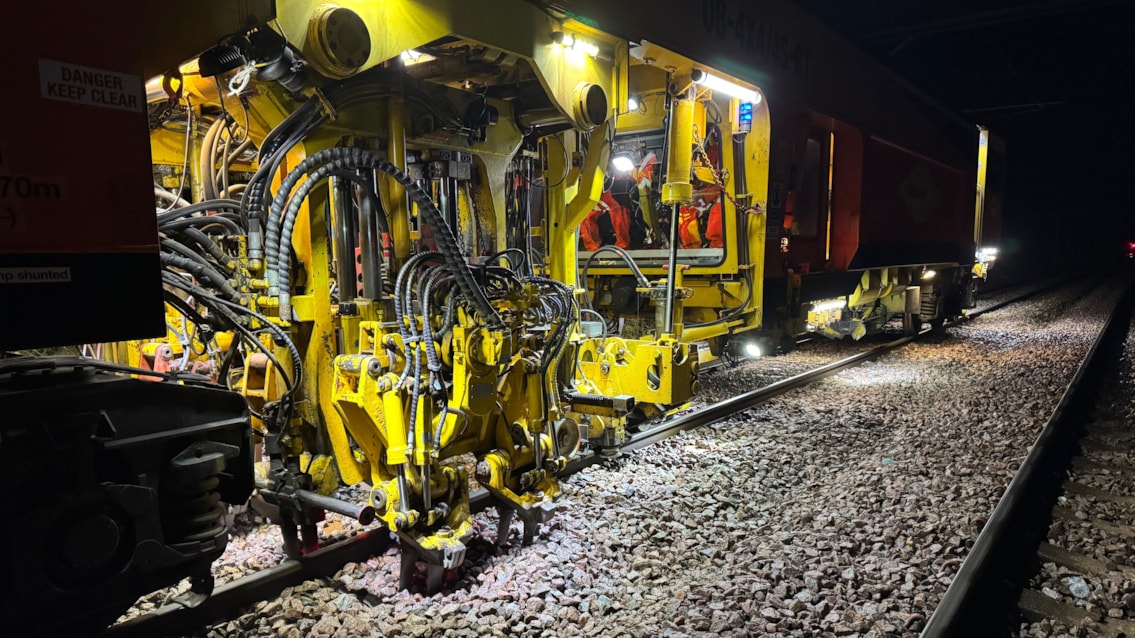
To minimise the effects of dried-out soil on Anglia this summer, extra engineering work will continue, with Network Rail using machines called tampers to help create a solid foundation so that trains can run smoothly. New ballast (the stones underneath the rails and sleepers) is also being put down to help raise the level of the track.
Last year, railway engineers used tampers to treat around 100km of track affected by dried-out soil on Anglia. Ahead of this summer season, thousands of tonnes of ballast were dropped to help keep the track as smooth as possible, with 49,000 tonnes expected to be dropped during 2026 in total.
Martin Beable, Chief Operating Officer for GBR Anglia, said: “We’re taking action to keep everyone moving safely and reliably while minimising the impact on passengers. Our teams are working together across Anglia to keep running the best possible service despite the significant challenges we’re facing because of this exceptionally hot and dry weather.
"We never want our customers to experience disruption, but safety will always be our priority. Thank you for bearing with us, and please do check before you travel, particularly if you’re used to getting the same time train every day.”
Passengers planning to travel through Wickford are currently being advised only to use this route if their journey is essential, following the derailment of one carriage of a Greater Anglia train on Friday 14 August. This is because the railway remains closed between Billericay and Hockley to allow for emergency repairs of 1.5 miles of infrastructure. Train services to/from Southend Victoria are expected to be back to normal from Wednesday 26 August, with the Wickford to Southminster line continuing to see a replacement bus service up to and including Friday 28 August due to pre-planned engineering work. Read more
GBR Anglia brings c2c, Greater Anglia and Network Rail Anglia together under a single unified structure on the journey to Great British Railways. The three organisations are increasingly planning and delivering as one railway, enabling faster and more joined up decision-making.
Contact information
Passengers / community members
Network Rail national helpline
03457 11 41 41
Latest travel advice
Please visit National Rail Enquiries
Journalists
Richard Cooper
Communications manager
Network Rail
0330 8577 132
richard.cooper3@networkrail.co.uk
About Network Rail
We own, operate and develop Britain's railway infrastructure; that's 20,000 miles of track, 30,000 bridges, tunnels and viaducts and the thousands of signals, level crossings and stations. We run 20 of the UK's largest stations while all the others, over 2,500, are run by the country's train operating companies.
Usually, there are almost five million journeys made in the UK and over 600 freight trains run on the network. People depend on Britain's railway for their daily commute, to visit friends and loved ones and to get them home safe every day. Our role is to deliver a safe and reliable railway, so we carefully manage and deliver thousands of projects every year that form part of the multi-billion pound Railway Upgrade Plan, to grow and expand the nation's railway network to respond to the tremendous growth and demand the railway has experienced - a doubling of passenger journeys over the past 20 years.
Follow us on Twitter: @networkrail
Visit our online newsroom: www.networkrailmediacentre.co.uk