Thursday 23 Jul 2026
Rail industry’s video technology strategy will help create a safer, smarter railway
- Region & Route:
- National
The rail industry has published its Visual Safety and Security Systems (VSS) Strategy to transform how video technology is used to keep passengers and staff safe, tackle crime and anti-social behaviour, and improve the performance of the sector.
Developed collaboratively by Network Rail, the Rail Delivery Group (RDG), British Transport Police (BTP), train operators and industry partners, the strategy sets out a unified, long-term approach to visual safety and security systems.
The strategy will simplify and standardise technology across the rail network as it moves towards a single identity under Great British Railways, providing a better experience for passengers.
A number of visual safety and security systems are already in place and cover a range of technologies, including:
- Fixed and mobile camera systems, including stationary CCTV at stations, crossings, and depots
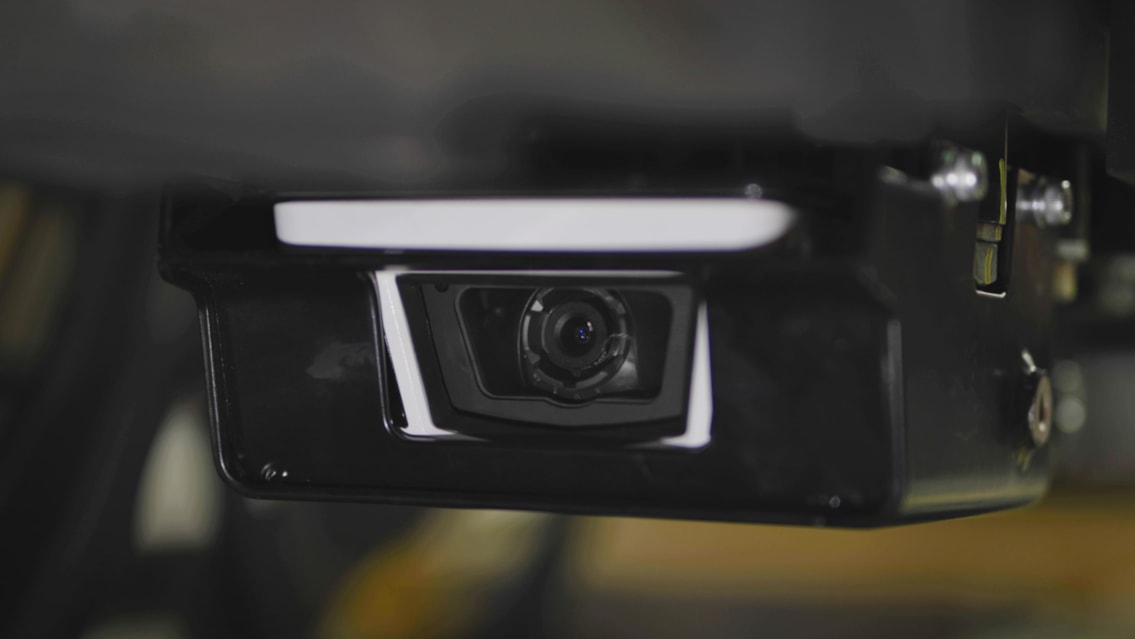
- Front-facing and on-board train cameras
- Body-worn video used by staff and security teams
- Drone footage for overhead inspection and incident response
- Integrated Cloud-Based VSS for live monitoring, storage, and retrieval
- Sensor and analytics tools to support automation, incident detection, and AI-powered analysis
Such systems provide a number of significant benefits for passengers, staff, and rail operators, including monitoring at high-risk or operationally sensitive locations, assessing the condition of assets for the early detection of faults, managing passenger flow and crowd dynamics during busy periods and, crucially, facilitating the quick resumption of services following disruption.
However, due to the breadth and complexity of the rail network, VSS assets are spread across thousands of locations, with many having been installed piecemeal over recent decades. This has resulted in mixed levels of technological maturity, ranging from older analogue systems to newer digital and AI-enabled platforms.
With major infrastructure renewals already under way across the network, the industry is now working to ensure that investment decisions taken today are aligned with a forward-looking strategy that will shape the railway's operational and digital capabilities well into the 2030s.
Current arrangements can also see different CCTV systems and other technologies being used by different parties, increasing the time it takes to access and share footage. To tackle this, the new strategy provides the groundwork for creating a unified, shared platform that allows for multiple organisations such as Network Rail, BTP, and train operators to quickly access and view footage, reducing delays and leading to quicker resolutions during incidents.
This platform – known as the Video Connectivity Platform (VCP) – will provide the foundation for unifying CCTV systems and allowing for rapid, real-time access of CCTV feeds to provide information on safety, disruption, and live incidents. Backed by £17m of government funding, the VCP will modernise and simplify video systems across the rail network. The VCP is also intended to future-proof CCTV assets by ensuring compatibility with emerging technologies and allowing for seamless future upgrades.
Financial modelling indicates the strategy could deliver savings of up to £20 million per year in Schedule 8 delay costs – the costs paid by the rail industry following delays – and £16 million per year in safety-related savings, alongside a range of further operational benefits.
The strategy also directly supports the government’s Safer Railways Scheme, reinforcing the industry's commitment to making rail a safe choice for everyone travelling on, or working near, Britain's railways.
Peter Gibbons, Chief Security Officer at Network Rail, said: “We are at our best as a rail industry when we embrace new technology, and ensuring our visual security systems are up to date is no different.
“This strategy marks a significant step forward for security across Britain's railway. For too long, our visual systems have operated in silos, limiting our ability to respond.
“By using modern technology, such as rapidly deploying a drone to assess a station, or through using AI-enhanced CCTV to detect potential risks at a platform’s edge, we can minimise disruptions to services and keep people safe.
“Through bringing the industry together around common standards and a shared architecture, we can move from a reactive approach to one that is truly intelligence-led. This is about making the railway safer for passengers and colleagues alike, and I'm proud that Network Rail is helping to lead that change."
Jacqueline Starr, Executive Chair and Chief Executive Officer at RDG, added: "From CCTV and body-worn video to drone footage and emerging technologies, these systems play a vital role in helping keep passengers and colleagues safe, supporting police investigations and improving the day-to-day operation of the railway.
"We're proud to have helped bring the industry together behind a shared vision that will improve coverage, connectivity and capability across the network, supporting both the Safer Railways Scheme and providing a clear roadmap for unlocking the full potential of these technologies over the coming decade.
"Everyone has the right to work and travel without fear, we're committed to delivering on our wider ambition of a safer railway for everyone."
British Transport Police Assistant Chief Constable, Charlie Doyle said: “High quality CCTV is a valuable tactic which allows us to quickly and effectively identify suspects and bring them to justice – making the network safer for the travelling public.
“We’ve worked closely with Network Rail and the Department for Transport on this project to ensure that our officers will have access to higher-quality CCTV, which they’ll be able to access faster and more efficiently, and solve crimes with the strongest possible evidence.”
Notes to Editors
- The Rail Industry Visual Safety and Security Systems Strategy was published in April 2026 and covers the period through to 2034, spanning Control Periods 7 and 8.
- The Rail Industry Visual Safety & Security Systems Strategy can be accessed here.
- The strategy was developed with input from Network Rail, the Rail Delivery Group, RSSB, Train Operating Companies, Freight Operating Companies, British Transport Police, and technical and operations consultants.
Contact information
Passengers / community members
Network Rail national helpline
03457 11 41 41
Latest travel advice
Please visit National Rail Enquiries
Journalists
Patrick Ford
patrick.ford@networkrail.co.uk
About Network Rail
We own, operate and develop Britain's railway infrastructure; that's 20,000 miles of track, 30,000 bridges, tunnels and viaducts and the thousands of signals, level crossings and stations. We run 20 of the UK's largest stations while all the others, over 2,500, are run by the country's train operating companies.
Usually, there are almost five million journeys made in the UK and over 600 freight trains run on the network. People depend on Britain's railway for their daily commute, to visit friends and loved ones and to get them home safe every day. Our role is to deliver a safe and reliable railway, so we carefully manage and deliver thousands of projects every year that form part of the multi-billion pound Railway Upgrade Plan, to grow and expand the nation's railway network to respond to the tremendous growth and demand the railway has experienced - a doubling of passenger journeys over the past 20 years.
Follow us on Twitter: @networkrail
Visit our online newsroom: www.networkrailmediacentre.co.uk