Monday 12 Oct 2026
Rail industry crackdown as trespassing criminals in Sussex cause nearly 110,000 minutes of delays for passengers in a year
- Region & Route:
- Southern
- | Southern: Sussex
- In Sussex, the number of trespass incidents on the railway rose from 715 in 2021/22 to 951 in 2025/26 – an increase of over 200 in five years
- Trespass crime caused nearly five months of delays to passengers and cost the industry over £10 million in delay costs
- Across the national network cable theft alone caused over 2,100 hours of delays and saw delay costs double to £6.8m in 2025/26
- New crackdown campaign sees rail industry and British Transport Police work closer together to tackle trespass and railway crime
- New technology and better evidence gathering to bring more offenders to justice and reduce impact on passengers
New figures show trespass-related crimes caused nearly 110,000 ‘delay minutes’ to affected trains in Sussex in 2025/26 – a figure that has more than doubled in five years.
The number of incidents on the railway, which includes the Brighton Main Line and routes off it, increased by over 200 in the last five years, from 715 in 2021/22 to 951 in 2025/26.
The number of ‘delay minutes’ caused to passengers in Sussex – the total number of minutes of delays caused to affected trains – more than doubled in that time.
On the national network, 3,300 hours – equivalent to over four and a half months – of delays were caused to passengers and cost the rail sector more than £10 million in delay costs during 2025/26.
Campaign
In response, the rail industry and British Transport Police (BTP) have launched a new campaign to crack down on crimes committed by trespassers on the railway.
Trespass is one of the railway’s biggest causes of disruption and can have a significant impact on train performance, passengers, freight, railway staff and local communities. It can also require a substantial industry response and comes at a considerable financial cost.
Network Rail, BTP, and the wider industry have been working together more closely than ever before, with the new levels of collaboration allowing for a deeper understanding and ability to tackle crime, identify offenders, and minimise the impact on the railway.
Part of the enhanced collaboration will see improved evidence collection to strengthen prosecutions, as well a greater focus on victim impact statements to help demonstrate the impact of delays caused by railway crime.
Cable theft
Across the network, cable theft alone caused more that 2,100 of those delay hours - an increase of 84% from the previous year - and cost the industry almost £6.8 million in the same period, doubling on the previous year. Thefts cause potentially lengthy delays due to damage to signalling mechanisms and overhead wires, which impact the railway's ability to operate safely, affecting both passenger and freight services.
Vandalism
Meanwhile, vandalism and offenders deliberately obstructing trains – through placing items such as rocks and even other pieces of track on the railway – caused over 1,200 hours of delays and cost over £4 million in delays in 2025/26.
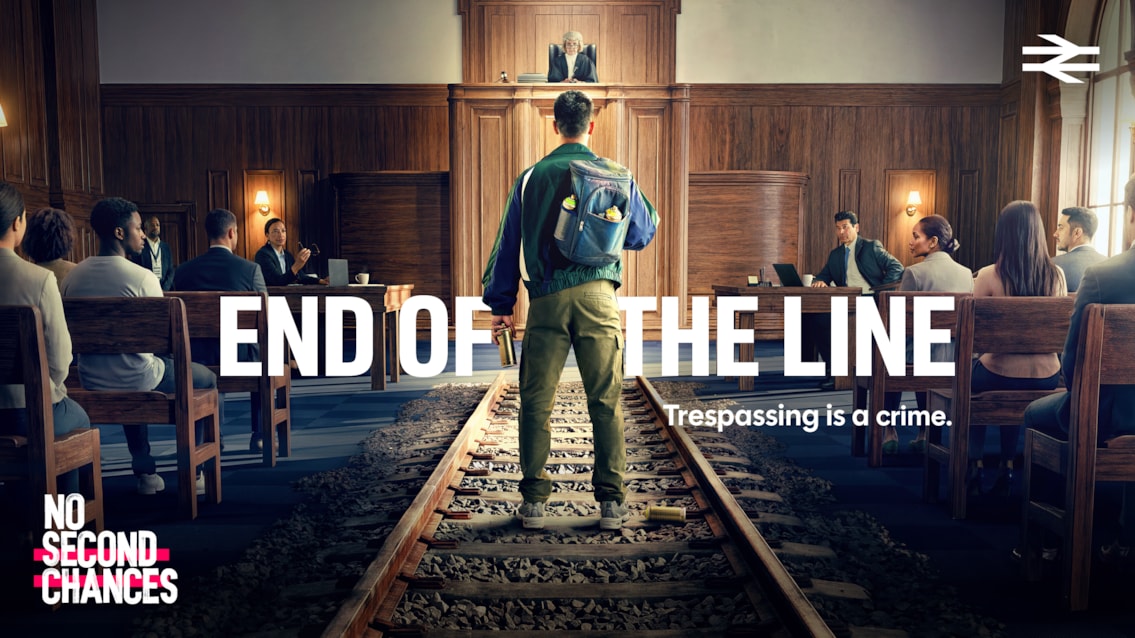
The organisations have today launched the new 'Crime with Consequences' campaign to make sure potential offenders are aware they will face the full force of the law if they commit crimes on the railway – including severe fines or even prison sentences.
Figures show that since 2021/22 there have been almost 24,000 trespass- and obstruction-related crimes recorded nationally, with more than 5,800 cases being successfully pursued.
What we are doing in Sussex
Network Rail in Sussex has introduced a number of initiatives to help tackle cable theft and other crimes on its network, with drones and AI-powered CCTV cameras being used by police to check for railway trespassers in a bid to tackle a problem that causes more delays than signal failures each year.
The drones shorten the search for people reported on the tracks from about an hour or more to a matter of minutes, and can often avoid the need to switch off the power and reduces the risk to search parties.
An Emergency Intervention Unit of Network Rail staff and British Transport Police can also attend incidents on a blue light response.
Anit Chandarana, Director for System Operator at Network Rail, said: "Behind every one of these delays caused by railway crime is someone not being able to get home to their family, another person late to a job interview, or food stuck on its way to a supermarket shelf. Cable theft, vandalism and obstruction aren't victimless crimes, they're crimes against the millions of people who rely on the rail network every day.
"The rail industry is working more closely than ever with the British Transport Police, using new technology, from concealed tracking devices to smart CCTV, to detect offences more quickly and support investigations. This campaign is a clear warning that anyone who commits crime on the railway risks facing serious consequences for their actions."
Paul Langley, Head of Security, Crime and Resilience at Network Rail Southern Region said: "In the south east we’re only too aware of the consequences of trespassing on the railway. It can affect thousands of people on a daily basis.
"Our message is, stay off the tracks. You're putting not only yourself at risk, but also those people who have to respond to it, and trespass-related crime not only has a huge impact on our staff working on the railway itself but also for people who just want to get to work, get home to their children, make a hospital appointment or catch a flight to the airport.”
Superintendent Darren Malpas, of British Transport Police, said: "Cable theft and associated railway crimes like trespass aren’t victimless offences. They put lives at risk, cause significant disruption to passengers and freight services, and cost the rail industry millions of pounds every year, which ultimately ends up costing the public more.
“This important campaign highlights both the dangers and consequences of criminal activity on the rail network. Those involved must understand that railway infrastructure is extremely dangerous. Anyone trespassing on the railway or attempting to steal cable risks serious injury or death. Through closer collaboration, improved intelligence, new technology and stronger evidence gathering, we’re working tirelessly to identify offenders, bring them to justice and protect the communities and passengers who rely on the railway every day."
The campaign forms part of the wider rail industry's efforts to reduce trespass and rail crime, working alongside the existing "No Second Chances" safety programme.
Notes to Editors
- These delay costs are the amount of money publicly owned Network Rail provides to train operators to compensate for delays related to its tracks, known as Schedule 8 costs.
- Network Rail recorded 111 incidents of cable theft in 2025/26, causing 128,252 delay minutes (2137.5 hrs) and £ 6,797,387 in Schedule 8 costs.
- Network Rail recorded 961 incidents of vandalism and obstruction in 2025/26, causing 72,323 delay minutes (1205.4 hrs) and £4,051,673 in Schedule 8 costs.
- This totals 200,575 delay minutes (3342.9 hrs) and £10,849,060 in Schedule 8 costs.
- Cable theft costs Network Rail millions of pounds each year. The total cost to the economy – taking into account the impact of freight delays to power stations and supermarkets, and on passengers who miss appointments or have their journeys affected – is even higher.
- The design of Britain’s rail network ensure it fails safely, so when a cable is cut, trains come to a standstill. This approach protects passengers but can cause lengthy, frustrating delays while the problem is located and safely fixed.
- A large proportion of our funding comes from the Government, so these thefts are, ultimately, costing taxpayers money.
- Schedule 8 is an automatic payment mechanism that ensures Network Rail (as infrastructure owners) and Train Operating Companies (TOCs) are held financially neutral for delays that they cause to each other
- More information on Schedule 8 costs: Payments for disruption on the railway - Network Rail
- The figures above refer to delay-causing incidents, i.e. where an incident of cable theft has caused delays to train performance. They do not include instances of non-delay causing incidents.
- Network Rail uses the XA (Trespass Incident Count), XB (Vandalism/Obstruction Incident Count) and XR (Cable Theft Incident Count) incident codes.
- The Delay Attribution Principles and Rules (DAPR) definition of an external XA trespass event includes:
- Trespass on NR infrastructure where access is not due to inadequate maintenance of fencing by NR or where access is gained via a station
- Threat of trespass from a station/footbridge resulting in cautioning trains
- Person(s) falling or jumping from platform onto NR infrastructure or sitting with their legs dangling over the platform edge
- Person(s) surfing on or alighting directly from the outside of a passenger or freight train where access was obtained to that train whilst on the NR network (including stations)
Trespass Incident Count
|
|
2021/22 |
2022/23 |
2023/24 |
2024/25 |
2025/26 |
|
Sussex |
715 |
761 |
852 |
879 |
951 |
Trespass Delay Minutes
|
2021/22 |
2022/23 |
2023/24 |
2024/25 |
2025/26 |
|
|
Sussex |
48,796 |
53,393 |
77,602 |
102,939 |
109,392 |
Vandalism/Obstruction Incident Count
|
|
2021/22 |
2022/23 |
2023/24 |
2024/25 |
2025/26 |
|
Sussex |
76 |
116 |
96 |
66 |
62 |
Vandalism/Obstruction Delay Minutes
|
|
2021/22 |
2022/23 |
2023/24 |
2024/25 |
2025/26 |
|
Sussex |
3,925 |
4,254 |
7,249 |
4,357 |
3,448 |
Trespass Schedule 8 Costs
|
|
2021/22 |
2022/23 |
2023/24 |
2024/25 |
2025/26 |
|
Sussex |
£4,868,661 |
£5,550,448 |
£8,001,222 |
£8,305,767 |
£8,321,321 |
Vandalism/Obstruction Schedule 8 Costs
|
2021/22 |
2022/23 |
2023/24 |
2024/25 |
2025/26 |
|
|
Sussex |
£ 374,438 |
£ 363,835 |
£1,011,482 |
£215,910 |
£264,626 |
Contact information
Passengers / community members
Network Rail national helpline
03457 11 41 41
Latest travel advice
Please visit National Rail Enquiries
Journalists
Paul Prentice
Communications Manager
07354 529345
paul.prentice@networkrail.co.uk
About Network Rail
We own, operate and develop Britain's railway infrastructure; that's 20,000 miles of track, 30,000 bridges, tunnels and viaducts and the thousands of signals, level crossings and stations. We run 20 of the UK's largest stations while all the others, over 2,500, are run by the country's train operating companies.
Usually, there are almost five million journeys made in the UK and over 600 freight trains run on the network. People depend on Britain's railway for their daily commute, to visit friends and loved ones and to get them home safe every day. Our role is to deliver a safe and reliable railway, so we carefully manage and deliver thousands of projects every year that form part of the multi-billion pound Railway Upgrade Plan, to grow and expand the nation's railway network to respond to the tremendous growth and demand the railway has experienced - a doubling of passenger journeys over the past 20 years.
Follow us on Twitter: @networkrail
Visit our online newsroom: www.networkrailmediacentre.co.uk