Tuesday 19 May 2026
Northern City Line celebrates one year of ‘no signals’
- Region & Route:
- Eastern
- | Eastern: East Coast
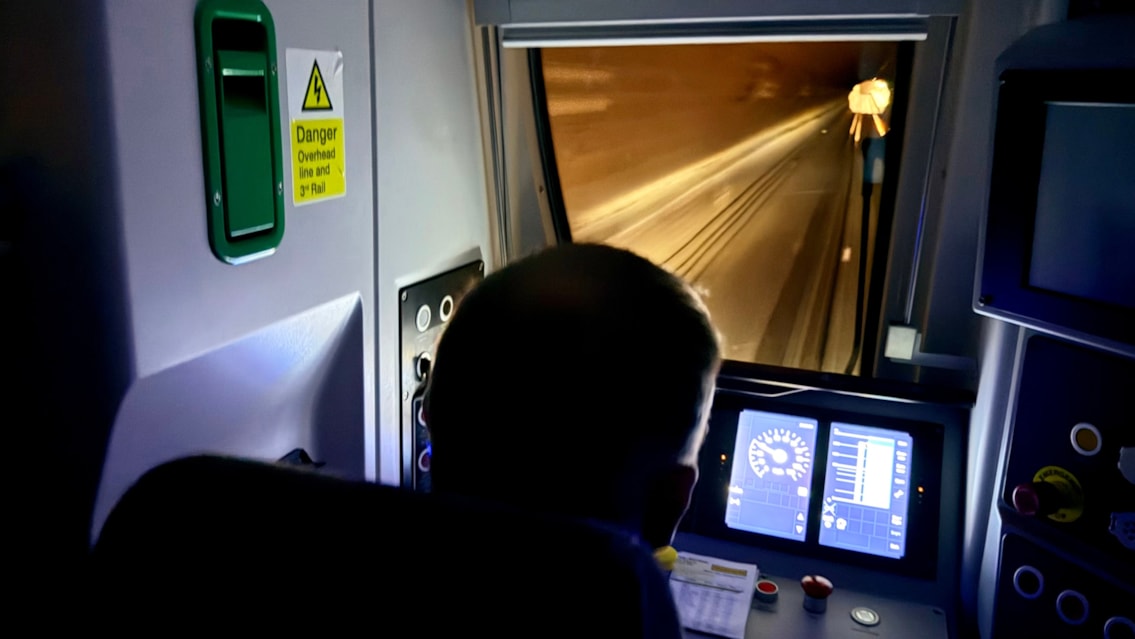
The Northern City Line (NCL), between Finsbury Park and Moorgate in the City of London, today (Tuesday 19 May) celebrates one year since its physical lineside signals were removed.
The NCL became Britain’s first ‘no signals’ commuter railway in May 2025, and since then almost 70,000 train services* have been operated by Great Northern using digital in-cab signalling.
The groundbreaking NCL project is a vital ‘pathfinder’ for the introduction (from later this year) of digital signalling to the East Coast Main Line (ECML), enabling a more reliable, more efficient, greener and even safer railway. Part of the Government-funded £1.4billion East Coast Digital Programme (ECDP), it will be the largest and most complex digital signalling migration undertaken anywhere in the world. The learnings taken from NCL in integrating the European Train Control System (ETCS), preparing and supporting drivers and signallers through the changes, and progressing through industry assurance, have all been vital in that regard.
The move from an ‘overlay’ (where trains can be operated either with digital or conventional signalling) to a no-signals railway has seen a steady improvement in the reliability of services. The partners involved (GTR, Network Rail and Siemens Mobility) have worked closely to optimise how colleagues interact with the system, ensuring that learnings have been taken from teething issues encountered in the early stages.
Sarah Jane Crawford, Network Rail’s industry partnership director, ECDP, said:
“I’d like to thank all our teams across our partners who have worked hard to embed ‘no signals’ operations on the NCL as part of the regular, day-to-day service pattern.
“We’ve ‘learned by doing’ on NCL, where we successfully secured the necessary approvals and integrated across track and train. We’re now close to beginning the introduction of digital in-cab signalling on the East Coast Main Line, with significant learnings informing a gradual migration plan aimed at ensuring high performance throughout.”
Raj Patel, GTR’s head of digital signalling, said:
“The NCL project has delivered a standout success, paving the way for a truly ‘no‑signals’ railway.
“Achieving this transformation on an intensive commuter route in just a year is a remarkable milestone. It’s a testament to the close collaboration across all partners, and it’s already delivering results with improved reliability of signalling assets.
“With that momentum behind us, we’re excited to introduce the first digitally signalled trains on the East Coast Main Line later this year.”

Richard Cooper, infrastructure lead and ECDP project director, Siemens Mobility UK&I, said:
“This milestone proves digital signalling works reliably and at scale on one of the UK’s most demanding urban routes. Working with GTR and Network Rail, we have delivered a more reliable, connected and sustainable railway, with the Siemens‑built Class 717 fleet and our ETCS technology at its core.
“These lessons now underpin the next step of introducing ETCS to the East Coast Main Line to help transform rail travel and transport for passengers and freight across the network.”
Gadge Grocott, ASLEF’s health and safety representative for Hitchin, said:
“I have had the pleasure of welcoming, last year, the introduction of ETCS on the Northern City Line. Updating the antiquated equipment into a modern Class A system is a huge project, involving the retraining of drivers, signallers, and managers. A successful 12 months has seen continued improvement with consultation and cooperation at all levels.”
Dr Linda Wain, engineering and safety director for LNER, said:
“The learnings that have been taken from the NCL project have been invaluable for ETCS being introduced to the East Coast Main Line. We’re really looking forward to next year and running our Azuma fleet in ETCS and realising the benefits digital signalling brings for customers and the railway.”
Notes to Editors
*If those during the overlay period are included, it makes a total of 138,000 services which have used digital signalling.
Contact information
Passengers / community members
Network Rail national helpline
03457 11 41 41
Latest travel advice
Please visit National Rail Enquiries
Journalists
Gareth Dennison
Media relations manager, Eastern region
Network Rail
07561 874858
gareth.dennison@networkrail.co.uk
About Network Rail
We own, operate and develop Britain's railway infrastructure; that's 20,000 miles of track, 30,000 bridges, tunnels and viaducts and the thousands of signals, level crossings and stations. We run 20 of the UK's largest stations while all the others, over 2,500, are run by the country's train operating companies.
Usually, there are almost five million journeys made in the UK and over 600 freight trains run on the network. People depend on Britain's railway for their daily commute, to visit friends and loved ones and to get them home safe every day. Our role is to deliver a safe and reliable railway, so we carefully manage and deliver thousands of projects every year that form part of the multi-billion pound Railway Upgrade Plan, to grow and expand the nation's railway network to respond to the tremendous growth and demand the railway has experienced - a doubling of passenger journeys over the past 20 years.
Follow us on Twitter: @networkrail
Visit our online newsroom: www.networkrailmediacentre.co.uk