
Tuesday 10 Nov 2026
Major train stations in Britain forecast to generate £1.5bn a year by 2036 - driven by wellness retail boom
- Region & Route:
- National
- New report predicts more than 870 million customer visits to retail venues at 19 major stations by 2036
- Expected to drive £1.5bn of annual retail sales, up 45% on 2026 figures
- Wellness focused buys alone are forecast to hit £123.6m by 2036 – up 30% on where they are now
Annual customer spending across 19 key rail stations across Britain is forecast to reach £1.49 billion by 2036. This constitutes a 45% increase over the next decade, driven by rising customer numbers, growing leisure travel, evolving food and beverage offers and the increasing influence of wellness which is set to become one of the most significant growth sectors reshaping the role of Britain's stations.
In a new report released today by Network Rail, The Future of Stations 2036: Retail, F&B, Leisure and the Wellness Dividend, it is predicted that annual visits across its managed 19 stations, including London Waterloo, London King’s Cross, Birmingham New Street, Manchester Piccadilly and Glasgow Central are expected to exceed 870 million by 2036. This combination of strong customer growth alongside transformational shifts in consumer behaviour, leisure travel and wellbeing will see stations evolve from places people simply pass through into destinations where customers increasingly shop, eat, socialise and spend time.
While food and beverage will remain the anchor of station retail, the report identifies wellness as one of the most significant growth opportunities over the next decade. Health and wellness-related sales currently generate £95.4 million, accounting for 8.9% of total station sales, and are forecast to rise to £123.6 million by 2036 – 30% growth over the next 10 years.
The Station of the Future
The report draws on insights from Network Rail’s retail category leaders, retailers, industry experts and forecasters to examine how the next decade will be defined by making railway stations more compelling destinations.
The traditional boundaries between customers, shoppers and local residents will continue to blur. Today’s weekday commuter is also a weekend leisure traveller, while wellness has moved into the mainstream, influencing every aspect of how people live.
Harriet Hepburn, Corporate Finance, Partnerships and Retail Director, Network Rail said: “For our brands, the opportunity is significant. Success will depend on understanding a range of customer needs, creating offers that complement dwell time, removing friction for customers and delivering engaging experiences that cannot be replicated online."
This evolution comes at a pivotal moment for the railway sector. As Great British Railways takes shape, bringing track and train together under unified leadership, its future estate is expected to encompass around 2,500 stations across Britain, creating an unprecedented opportunity to reimagine the role stations play within communities and in everyday life.”
The Six forces that will define rail retail by 2036
- A £1.5bn retail opportunity driven by commuters, leisure travellers and locals.
- Visitor growth accelerates, led by London.
- F&B continues to lead the way, remaining at the heart of station spending
- The food-to-go battle intensifies, driven by quality, convenience and value.
- The Wellness Revolution, shaping retail, food, beauty and services.
- Technology will make station retail more personalised, convenient and seamless.
Retail fundamentals win, with speed, service, value and experience driving success.
THE WELLNESS REVOLUTION
According to Network Rail, wellness is one of the biggest trends influencing consumer spending patterns across grocery, food to go, health products and fashion. This is set to grow exponentially over the coming years, as the use of weight loss medication, such as GLP-1s increases - currently 10% of the population are using them to manage weight loss.*
The report identifies that consumers are increasingly seeking healthier food options, personalised nutrition, beauty and wellbeing products, and environments that support their physical and mental wellbeing while travelling. This is behaviour is directly influencing the way station retail and F&B offers are being curated.
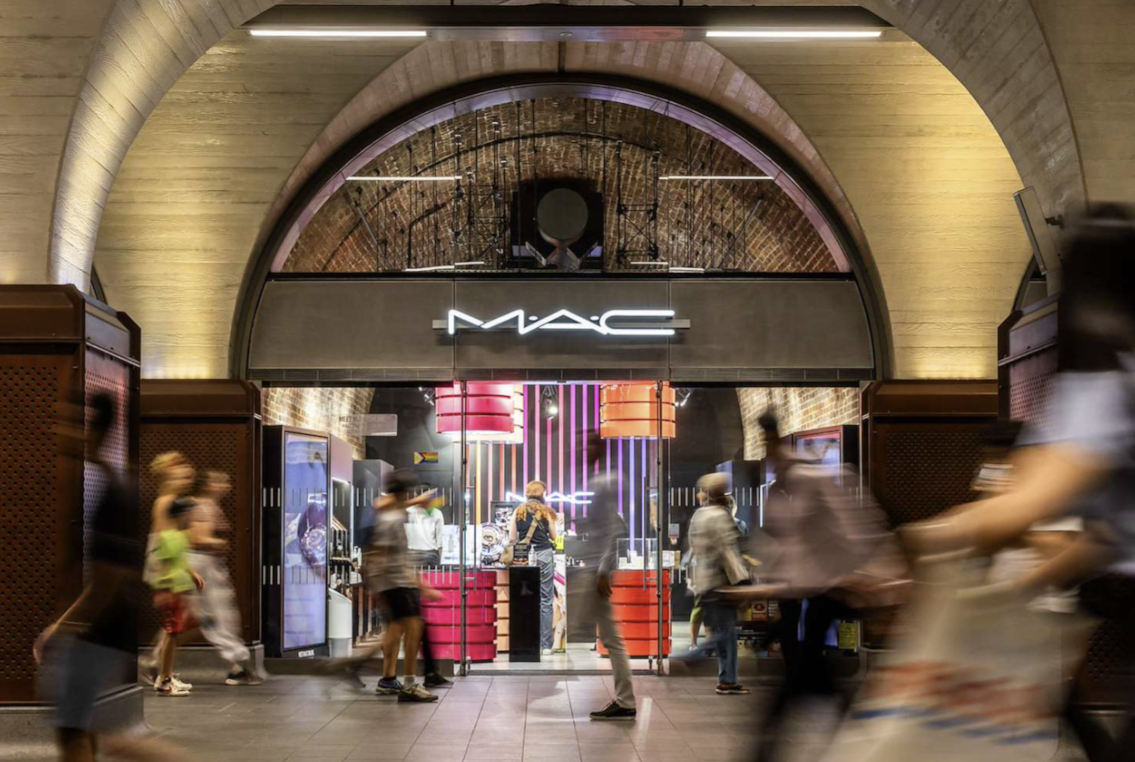
Health and beauty shoppers in stations are a valuable and highly engaged audience, with almost half (46%) aged between 18 and 34. Leisure travellers who have an average household income of £53,738, account for 55% of health and beauty users in stations. In addition, impulse purchasing is particularly significant, with 53% of health and beauty impulse buys made by a younger demographic who are also the highest-spending group within station environments.
Nick Gee, Category Manager, Network Rail says: “Health and beauty is becoming one of the most dominant retail categories in our stations. That’s been a real game changer. Beauty, health and wellness are no longer occasional purchases; they’ve become part of customers’ everyday routines.”
According to Network Rail customisation is a clear differentiator in the healthy segment and rising in importance and the big news for hospitality is how weight loss drugs are reshaping how the UK thinks about health and eating out.
Fiona Thomson, Category Manager at Network Rail says: “By 2036, customisation will be the default, but how we align this with speed and convenience will be key. In 2036, travellers may build meals almost as easily as ordering a coffee today, choosing protein, sauce, fibre level and portion size, adjust calories and macros, save favourite combinations in an app. The concept of a fixed meal deal could evolve into a highly customised bundle.”
Jacqueline Windsor, Head of Retail at PwC adds: "Wellness is becoming a cross-category ecosystem. From beauty and personal care to fitness, sleep and mental health, brands are increasingly addressing consumers' health needs in more connected ways, causing traditional industry lines to converge."
Despite continued cost-of-living pressures, the report finds that health and wellbeing remain a priority area for consumers. Jacqueline Windsor says: " Wellness has become a protected spend. Many consumers may make savings elsewhere, but they continue to invest in products, services and experiences that help them live longer and healthier lives."
THE RISE OF THE LEISURE TRAVELLER & THE STATION AS A PLACE IN ITS OWN RIGHT
The report also identifies that alongside the wellness boom, British rail stations are expected to benefit from continued growth in leisure travel. The next decade of station retail will cater more in tandem for the leisure traveller as well as those commuting and those who travel for both. In a survey conducted by Network Rail in November 2025 based on a sample of 5,133 people, leisure day trips are the biggest growth rail category with leisure passengers making up 46% of overall spend within a station.
The report examines how the station will in the future become ‘a third space’, with passengers increasingly seeing stations as places to spend time - not just pass through.
By 2036, stations may increasingly resemble highly curated retail and leisure destinations,, but with a crucial difference, they have a built-in audience arriving for another reason. The best environments will be fast when they need to be and slower when customers have time. According to the retail experts the station of 2036 should not be an anonymous retail box, but a recognisable part of its city.
The report forecasts that the most successful retailers will be those that combine convenience, value and speed with healthier offers, trusted brands and environments that reduce stress and enhance the customer experience.
The report concluded that the station is becoming one of the most powerful physical retail environments because the audience is already there. In the future stations are expected to play a much broader role in consumers' lives, blending transport, retail, food, services and wellbeing into a single destination.
Harriet Hepburn added: "The next 10 years is set to be a defining decade for station retail, F&B, health and wellness and leisure experiences. As GBR and our brands reimagine what's possible and our network spreads to stations large and small across the country, we are on the journey to provide our customers with world class travel environments."
The full report was discussed at a panel event held on the 10th November to over 40 retail and F&B operators.
LINK HERE FOR FULL REPORT THE STATION REIMAGINED SERIES
*Taken from a 2026 UCL study ‘Prevalence of use and interest in using glucagon-like peptide-1 receptor agonists for weight loss: a population study in Great Britain’
Ends
Notes to Editors
For images and interviews please contact Sighthound: Lizzie.costelloe@wearesighthound.com [07876225893] and Fiona.ororke@wearesighthound.com [07812100338]
Contact information
Passengers / community members
Network Rail national helpline
03457 11 41 41
Latest travel advice
Please visit National Rail Enquiries
Journalists
Catrin Sharp
Head of Communications for Network Rail Property
07717 763 552
catrin.sharp@networkrail.co.uk
About Network Rail
We own, operate and develop Britain's railway infrastructure; that's 20,000 miles of track, 30,000 bridges, tunnels and viaducts and the thousands of signals, level crossings and stations. We run 20 of the UK's largest stations while all the others, over 2,500, are run by the country's train operating companies.
Usually, there are almost five million journeys made in the UK and over 600 freight trains run on the network. People depend on Britain's railway for their daily commute, to visit friends and loved ones and to get them home safe every day. Our role is to deliver a safe and reliable railway, so we carefully manage and deliver thousands of projects every year that form part of the multi-billion pound Railway Upgrade Plan, to grow and expand the nation's railway network to respond to the tremendous growth and demand the railway has experienced - a doubling of passenger journeys over the past 20 years.
Follow us on Twitter: @networkrail
Visit our online newsroom: www.networkrailmediacentre.co.uk