Thursday 19 Nov 2026
Investment, innovation, and preparation as the railway readies for autumn and El Niño
- Region & Route:
- North West & Central
- | North West & Central: Central
Better drainage, strengthened embankments, and using onboard train technology are some of the factors keeping trains moving this autumn.
Across the West Midlands and the Chiltern main line, Network Rail’s Central route and train operators are working to tackle the annual challenge of leaves on the line, as well as preparing for heavy rain and strong winds from the predicted strongest El Niño* since 2015.
Weather prep has been underway for more than a year, using long-term forecasts and lessons-learned from previous autumns and storms to be as ready as possible to keep passengers and freight on the move.
Leaves on the line is a major challenge every year, with compressed leaves on the tracks making it difficult for trains for accelerate and brake, similar to the effect black ice has on cars on the roads.
To tackle the autumn challenges, actions in place include:
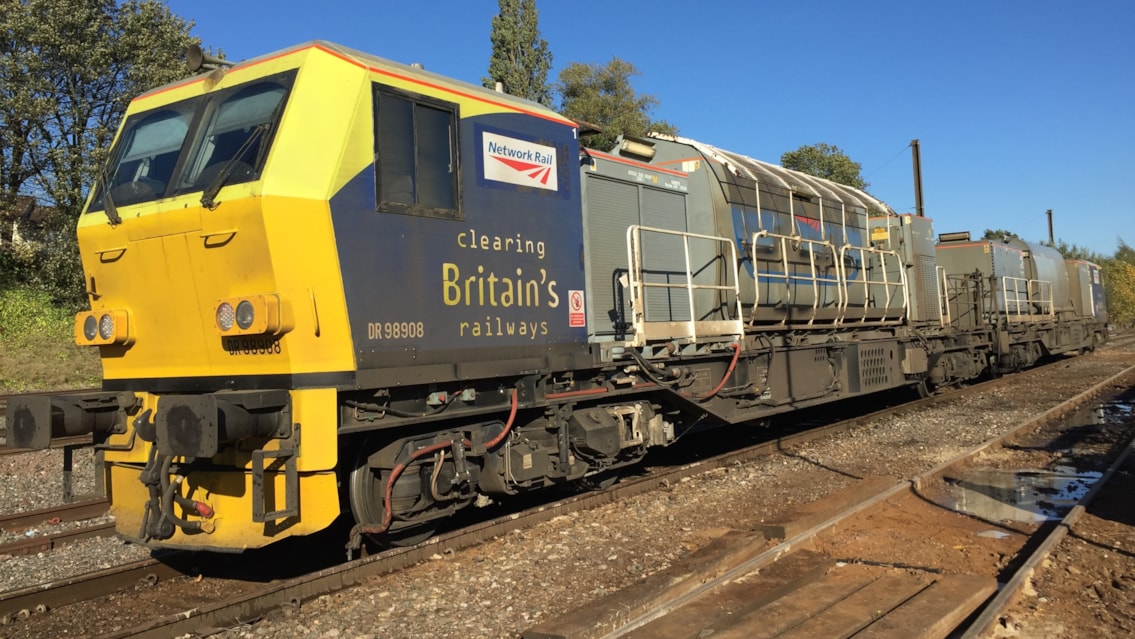
- Using a specialist cleaning train which will travel nearly 100,000 miles around the West Midlands and surrounding areas – almost four times around the equator – using 500,000 litres of water to blast leaves from the rails. The water pressure is so high that if the train stopped and sprayed in one place, the jets of water would cut through the steel rails.
- Trialling a new rail cleaning product, Interflon Clean OTR, at known hot spot areas to remove leaves and residue from the rails and reduce the risk of the build-up of reoccurring.
- Utilising technology on West Midlands Railway’s (WMR) newest trains – Class 730s and Class 196s – to detect more accurately when leaves are causing wheels to slip and then release sand directly in front of the wheels to improve grip.
- Using the latest train technology on WMR’s Class 730 trains to spread power across wheels throughout the train, helping improve grip as the train moves around, similar to all wheel drive systems on cars.
- Adding three minutes to journey times on Chiltern Railway’s services between Aylesbury Vale Parkway and Rickmansworth allows for a 40mph speed restriction between Mantles Wood and Rickmansworth, helping reduce wheel slip and ensuring signalling equipment correctly detects trains.
But it’s not just autumn that is likely to cause challenges this year, stormy weather expected to be caused by El Niño has also been prepared for.
Network Rail has invested more than £39m in earthworks and drainage over the past three years in the West Midlands and Chiltern area to help protect services from severe weather.
This work has included:
- Clearing more than 39,000m of drainage to help prevent heavy rain reaching the tracks.
- Drainage improvements and upgrades at more than 50 locations to make the railway better able to withstand bad weather.
- Increased flood resilience at Wellington station by improving the flow of water through the drainage system, along with the installation of a new pump system for severe events.
- At Bicester North, Launton, Bicester South and Fenny Compton on the Chiltern main line, embankments have been strengthened and drainage upgraded to help keep trains running between Birmingham and London.
- Investing in large and innovative inflatable tubes, each able to hold up to 8,000 litres of water, to be used at locations with histories of heavy flooding - floodwater can be pumped into and stored in them and then released when conditions improve.
- Embankment monitoring at 58 locations which would alert engineers to any soil movement which could pose a safety risk to trains.
Denise Wetton, integrated managing director for GBR West Midlands, said: “Our priority is to keep passengers and freight moving safely and reliably this autumn. Leaves and fallen trees pose a major risk on the railway, so teams looking after the tracks and trains are working closely together to be ready for these challenges.
“We have invested heavily to strengthen our weather resilience and put the railway in the best place to deal with extreme wind and rain. It’s also how we respond to challenges when they arise, and this has been a major focus across the industry so we can react quickly when disruption happens and get passengers and services moving again.”
Richard Denney, route infrastructure engineer, said: “Much of our preparation happens away from passengers’ view, but it makes a real difference to the railway they rely on. Clearing and upgrading drainage helps water flow away from the tracks, while strengthening embankments helps protect the railway during heavy rain. These improvements are about reducing the risk of disruption and keeping passengers and freight moving safely.”
Passengers should always check before they travel but this will be increasingly important if El Niño takes effect. Timetables may be amended at short notice to minimise the impact the weather has and help keep passengers on the move.
Journeys can be planned and checked at www.nationalrail.co.uk.
Notes to Editors
*El Niño is a natural climate pattern defined by the warming of sea surface temperatures in the central and eastern tropical Pacific Ocean. In 2026 it’s expected to be the strongest on record. In the UK, an El Niño event increases the likelihood of warmer, wetter, and stormier conditions. A severe or "supersized" El Niño can trigger heavy rainfall, severe autumn and winter storms, and an elevated risk of flooding. https://www.gov.uk/government/publications/impacts-of-el-nino-on-the-uk/impacts-of-el-nino-on-the-uk
Contact information
Passengers / community members
Network Rail national helpline
03457 11 41 41
Latest travel advice
Please visit National Rail Enquiries
Journalists
Sophie Dangerfield
Senior Communications Manager - Central route
Network Rail
0330 8540100 (Option 2)
sophie.dangerfield@networkrail.co.uk
About Network Rail
We own, operate and develop Britain's railway infrastructure; that's 20,000 miles of track, 30,000 bridges, tunnels and viaducts and the thousands of signals, level crossings and stations. We run 20 of the UK's largest stations while all the others, over 2,500, are run by the country's train operating companies.
Usually, there are almost five million journeys made in the UK and over 600 freight trains run on the network. People depend on Britain's railway for their daily commute, to visit friends and loved ones and to get them home safe every day. Our role is to deliver a safe and reliable railway, so we carefully manage and deliver thousands of projects every year that form part of the multi-billion pound Railway Upgrade Plan, to grow and expand the nation's railway network to respond to the tremendous growth and demand the railway has experienced - a doubling of passenger journeys over the past 20 years.
Follow us on Twitter: @networkrail
Visit our online newsroom: www.networkrailmediacentre.co.uk