Thursday 19 Nov 2026
From flood hotspot to a more resilient railway: how we’re keeping trains moving at Draycott
- Region & Route:
- Eastern: East Midlands
Network Rail has transformed the way one of the East Midlands’ most challenging flood sites is managed as the railway prepares for potentially severe weather this autumn and winter.
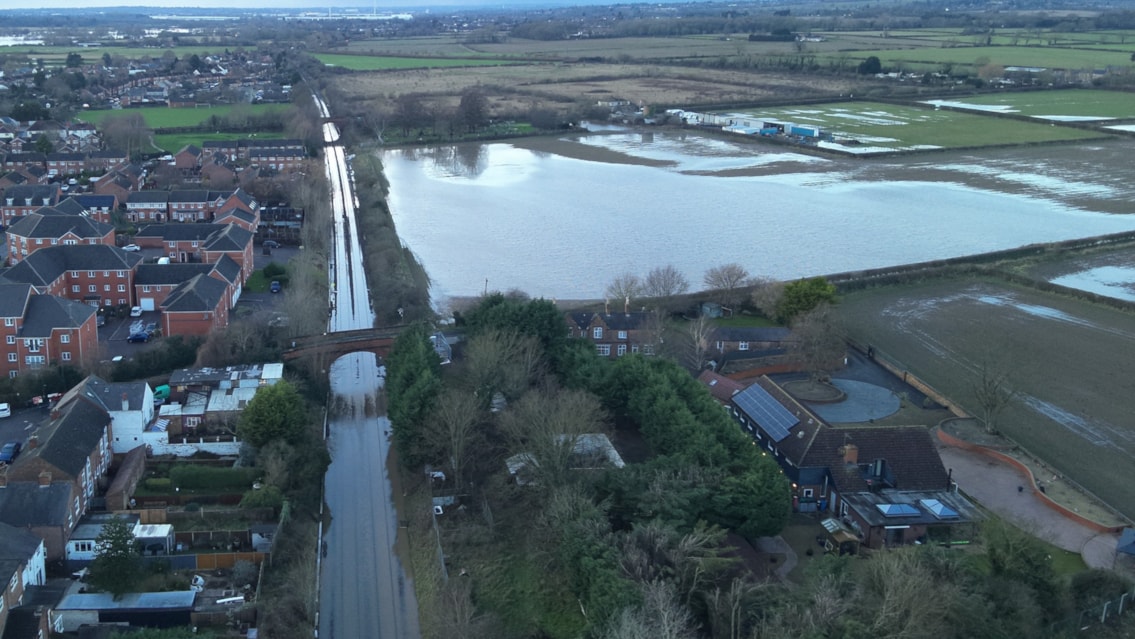
For more than 50 years, flooding has affected the Midland Main Line at Draycott in Derbyshire. During autumn and winter 2023/24, Storms Babet and Henk alone resulted in more than £1.5 million of train delay costs and disruption to 983 trains.
Now, significant work by Network Rail is making the railway better able to withstand heavy rainfall and keep passengers and freight moving.
More than £800,000 has already been invested in measures to improve resilience at Draycott, which included physically raising the railway out of harm’s way. Engineers lifted a vulnerable section of track by six centimetres, installed permanent pumps to help remove floodwater, repaired and cleared drainage, and fitted sensors that give teams earlier warning when water levels begin to rise.
The changes aren’t just physical. Cameras and live monitoring now give control teams a much clearer picture of what is happening at Draycott, bringing together information on rainfall, river levels and water around the railway. This helps teams spot potential problems earlier and, when heavy rain is forecast, switch the pumps on in advance to lower water levels before the worst of the weather arrives.
Together, the improvements mean teams can see trouble coming and respond more quickly – giving them a better chance of keeping trains moving safely rather than simply reacting once the railway has flooded.
The last severe flooding at Draycott was during the stormy autumn and winter of 2023/24. Since then, the improvements and new response arrangements have helped keep trains moving through periods of severe rainfall.
Nick Taylor, Route Infrastructure Engineer, Network Rail’s East Midlands Route, said:
“Anyone who has seen the pictures of Draycott under water will understand the challenge our teams face here.
“We can’t control the weather and we can’t promise the railway will never flood. What we can do is make it much more resilient and give our people better information, better equipment and a clear plan to respond when heavy rain arrives.
“At Draycott we’ve brought all of those things together. We’ve improved drainage, lifted a vulnerable section of track and introduced technology that helps us understand what is happening as water levels rise.
“This isn’t about one single solution. It’s about making practical improvements which, taken together, give us a much better chance of keeping trains moving safely when the weather is at its worst.
“There’s more to do, but Draycott is a really good example of the work happening across the East Midlands to make our railway better able to cope with increasingly challenging weather.“

Draycott isn’t simply a case of rain falling on the railway. Water flows towards the tracks from the surrounding area and, when the ground is saturated and the nearby River Derwent is running high, the railway can receive more water than its drainage system can carry away.
And the work doesn't stop there. A major £5 million upgrade of the track drainage through Draycott is planned for next summer, with the railway due to close through the area from 28 August to 7 September 2027 so engineers can carry out the work.
Passengers who travel through Draycott are being encouraged to put the dates in their diary now. Full travel advice, including information on alternative travel options, will be provided closer to the time.
Paul Barnfield, Operations Director at East Midlands Railway, said:
“The track near Draycott has been a challenging part of our network for many years, with flooding leading to services being cancelled or delayed.
“The vital investment by Network Rail in this area has made a significant difference, improving resilience and providing greater certainty for our customers as we approach the usual seasonal challenges that autumn and winter bring.”
The work at Draycott forms part of the industry’s wider preparations for autumn and winter across the East Midlands.
Across the railway, teams prepare for challenging weather by inspecting and clearing drainage systems, managing vegetation, monitoring infrastructure and strengthening operational response plans so that, when severe weather does arrive, the railway can respond safely and minimise disruption wherever possible.
Contact information
Passengers / community members
Network Rail national helpline
03457 11 41 41
Latest travel advice
Please visit National Rail Enquiries
Journalists
Paul Dent-Jones
paul.dent-jones@networkrail.co.uk
About Network Rail
We own, operate and develop Britain's railway infrastructure; that's 20,000 miles of track, 30,000 bridges, tunnels and viaducts and the thousands of signals, level crossings and stations. We run 20 of the UK's largest stations while all the others, over 2,500, are run by the country's train operating companies.
Usually, there are almost five million journeys made in the UK and over 600 freight trains run on the network. People depend on Britain's railway for their daily commute, to visit friends and loved ones and to get them home safe every day. Our role is to deliver a safe and reliable railway, so we carefully manage and deliver thousands of projects every year that form part of the multi-billion pound Railway Upgrade Plan, to grow and expand the nation's railway network to respond to the tremendous growth and demand the railway has experienced - a doubling of passenger journeys over the past 20 years.
Follow us on Twitter: @networkrail
Visit our online newsroom: www.networkrailmediacentre.co.uk