Thursday 26 Feb 2026
Charing Cross and Waterloo East stations to close for 22 days this summer for major upgrades, but routes into London remain open
- Region & Route:
- Southern
- | Southern: Kent
Trains will continue to run and routes into London will remain open, but journeys will be different and may take longer.
South Eastern Railway is advising customers of major engineering work taking place this summer which will affect journeys into London between Sunday 26 July and Sunday 16 August 2026.
During the 22 days, trains will continue to run, and routes into London will remain open. However, journeys will be different and may take longer, and customers are encouraged to think ahead about how the changes might affect their travel. Clear information on alternative routes and support will be provided before and throughout the works to help customers plan with confidence and complete their journeys.
During the works, routes into London will remain open:
- Southeastern services that normally run into Charing Cross will be diverted to London Victoria, London Cannon Street and London Blackfriars, with some trains terminating at London Bridge.
- Ticket acceptance will be available across alternative rail routes, London Underground and London Buses to keep people moving.
- We will work with transport providers to promote walking, cycling and accessible routes to help people complete their journeys.
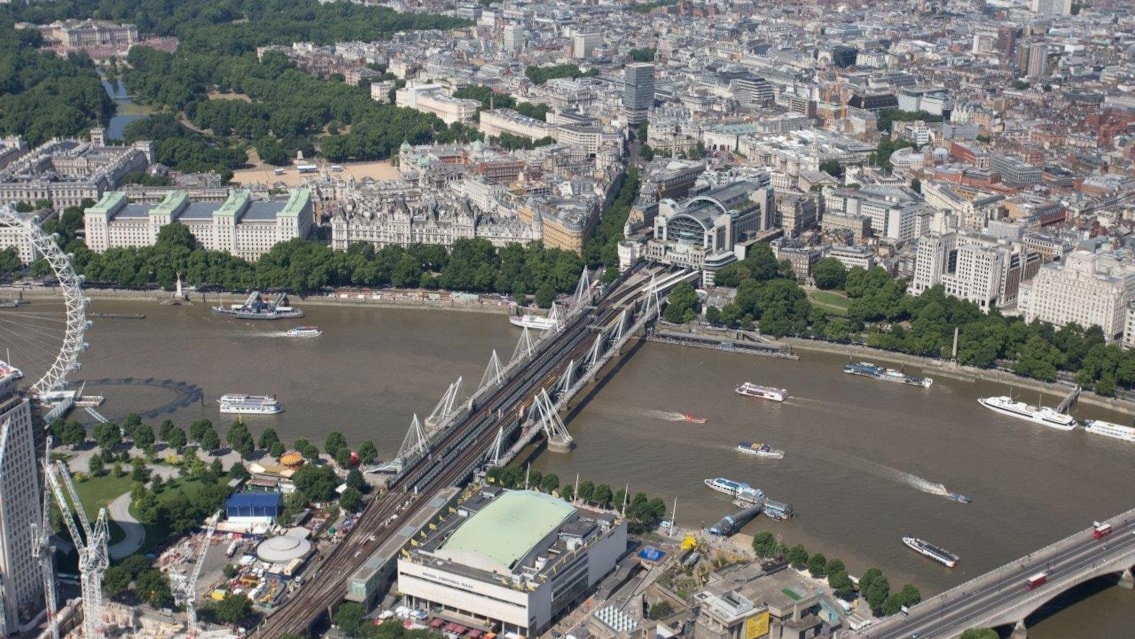
The temporary closure of Charing Cross and Waterloo East stations will allow South Eastern Railway to carry out a package of essential improvements designed to make journeys safe and reliable for years to come. Engineers will replace 1,800 metres of life-expired track between Waterloo East and Charing Cross and deliver a series of upgrades to improve reliability, safety and long-term performance.
The track, last replaced in the early 1990s, is becoming increasingly unreliable and requires extensive maintenance to keep services running safely. In recent years, faults on the approaches to London Charing Cross have caused hundreds of hours of delays. Without intervention, these issues would continue to worsen, leading to more delays for passengers.
To make the most of the closure, the 22-day programme includes drainage improvements at Waterloo East, structural repairs to Hungerford Bridge, and the railway is continuing to develop plans to bring even more work into the access. Completing these works a continuous 22-day closure means customers will experience the benefits sooner and helps avoid a long series of weekend or bank holiday closures.
Engineers, planners and timetable specialists examined a wide range of delivery options. A continuous 22-day closure in the summer, when schools are off, commuter numbers are lower, and customers generally have more flexibility, is the least disruptive and most efficient way to complete the work.
Other options considered by South Eastern Railway included:
- Weekend only working, requiring 60 weekend closures over 14 months, including key bank holidays, creating long-term disruption for passengers and businesses.
- Four separate nine-day closures spread over 10 - 16 months, causing repeated disruption to schools, commuters and businesses, and adding significant cost and complexity.
A single 22-day closure is the more considerate and effective way to deliver this essential investment.
Scott Brightwell, Director of Operations and Safety, South Eastern Railway, said: “We know closing Charing Cross and Waterloo East for 22 days is a significant change and we’re sorry for the disruption it will cause. This is not a decision we’ve taken lightly. We’ve looked long and hard at every possible option and although none of them are without impact, a single summer closure is the least disruptive and most efficient way to carry out this vital work.
“This section of track is more than 35 years old and has caused thousands of minutes of delays for passengers in recent years. By replacing it now, and combining that with platform, drainage and bridge works, we’re tackling the root causes of disruption in one go. This means fewer closures in the future and a more reliable railway for everyone who depends on these routes.
“We’re working closely with transport partners, local businesses and communities to keep people moving with ticket acceptance on alternative rail routes, London Underground and London Buses. We are committed to ensuring customers are informed, supported and cared for throughout the 22-day closure.”
Notes to Editors
More information: London Charing Cross and Waterloo East closed for essential engineering works - Network Rail
Contact information
Passengers / community members
Network Rail national helpline
03457 11 41 41
Latest travel advice
Please visit National Rail Enquiries
Journalists
Paul Prentice
Communications Manager
07354 529345
paul.prentice@networkrail.co.uk
About Network Rail
We own, operate and develop Britain's railway infrastructure; that's 20,000 miles of track, 30,000 bridges, tunnels and viaducts and the thousands of signals, level crossings and stations. We run 20 of the UK's largest stations while all the others, over 2,500, are run by the country's train operating companies.
Usually, there are almost five million journeys made in the UK and over 600 freight trains run on the network. People depend on Britain's railway for their daily commute, to visit friends and loved ones and to get them home safe every day. Our role is to deliver a safe and reliable railway, so we carefully manage and deliver thousands of projects every year that form part of the multi-billion pound Railway Upgrade Plan, to grow and expand the nation's railway network to respond to the tremendous growth and demand the railway has experienced - a doubling of passenger journeys over the past 20 years.
Follow us on Twitter: @networkrail
Visit our online newsroom: www.networkrailmediacentre.co.uk