Friday 6 Nov 2026
VIDEO: High-tech leaf treatment expanded across North Wales after trial records zero leaf-related delays
- Region & Route:
- Wales & Western: Wales & Borders
Pioneering technology developed by Network Rail Wales and Borders is being rolled out more widely following encouraging results from a trial on the Conwy Valley Line, which recorded no leaf-related delays last autumn
Network Rail is expanding the use of an innovative rail treatment across North Wales following a successful trial which saw no reported slippery-rail incidents or related delays on the Conwy Valley Line last autumn, compared with almost 500 minutes of delays the previous year.
The specialist treatment, known as Interflon Leaf Guard, is sprayed directly onto the rails to break down the slippery residue left behind by fallen leaves, helping trains grip the track more effectively when accelerating and braking.
The expansion is being delivered using new technology jointly developed by Network Rail Wales and Borders and its supply chain partners. In 2025, Wales and Borders became the first Network Rail route to introduce a computer-controlled method of applying the treatment, replacing the previous manual spraying process.
The treatment was trialled between Tal-y-Cafn and Blaenau Ffestiniog in autumn 2025, with encouraging early results.
There were no reported incidents of trains losing grip on slippery rails on the Conwy Valley Line in 2025, compared with six in each of the previous two autumns. There were also no related delays, compared with almost 500 minutes in 2024.
The programme has now been expanded onto the North Wales Coast Line between Conwy and Anglesey, with around 650 cumulative treatment miles planned over a 12-week programme, this autumn and winter.
The locations have been selected because they have experienced significant leaf fall related rail adhesion issues in previous years.
Tackling one of autumn’s biggest railway challenges
Leaves on the line might sound harmless, but they can cause significant disruption to train services.
When leaves fall onto damp rails and are crushed by passing trains, they form a hard, slippery layer similar to black ice on roads.
This reduces the grip between train wheels and the rails, making it harder for trains to accelerate and brake effectively, potentially leading to delays and disruption for passengers.
Interflon Leaf Guard works within the microscopic surface of the rail to break down the residue left by fallen leaves and help prevent it from building up again.
The treatment is reapplied every seven days to help maintain its effectiveness throughout the autumn period.
It forms part of Network Rail's wider preparations for autumn and winter, alongside established measures such as specialist Rail Head Treatment Trains, which travel across the network cleaning the rails.
By targeting known problem areas before issues develop, Network Rail aims to reduce the risk of disruption and help keep services running safely and reliably.
First-of-its-kind application technology
Network Rail Wales and Borders has become the first route in Network Rail to jointly develop and introduce a new computer-controlled method of applying Interflon Leaf Guard.
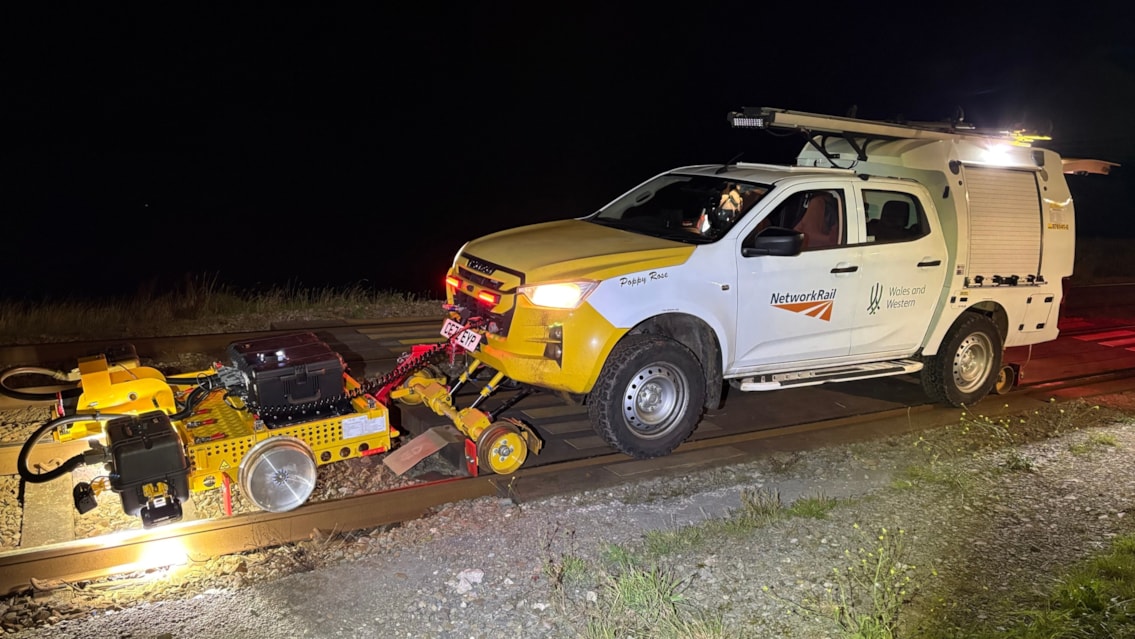
Known as RRV-SMART, the system is fitted to a specially adapted 4x4 vehicle which can travel on both roads and railway tracks.
As the vehicle moves along the railway at around 10mph, the system continuously monitors its speed and automatically adjusts the amount of treatment sprayed onto the rails.
Previously, the treatment was applied manually. The new technology provides a more precise, consistent and controlled application, helping teams target the areas where it is needed most.
The technology was jointly developed by Network Rail Wales and Borders, Fitzgerald Plant Services, Interflon Ireland and JCP Engineering Ireland.
Network Rail is also working closely with Transport for Wales to analyse information recorded by trains when their wheels slip on the rails.
This will help engineers better understand how effective the treatment is, assess its performance alongside other autumn measures and determine whether it could benefit other parts of the railway in future.
New camera technology also being trialled
The same specially adapted vehicle is also being used to trial innovative railway monitoring technology.
Working with technology company One Big Circle, Network Rail has adapted its AiVR Focus line-scanning camera system into a portable unit that can be quickly deployed wherever it is needed.
As the vehicle travels along the railway, the camera records the track and surrounding infrastructure, helping identify potential problems or objects on the line.
The trial will explore whether the technology could provide additional monitoring on routes not regularly covered by dedicated inspection trains, helping engineers spot potential issues earlier and respond more quickly.
Helping keep passengers moving
Daniel Booth, Head of Operational Weather Strategy at Network Rail Wales and Borders, said: "Leaves on the line might sound like a minor problem, but they can make the rails very slippery and cause significant disruption for passengers.
"That's why we're always looking for new ways to prevent problems before they affect services.
"Last autumn, we recorded no leaf-related delays on the Conwy Valley Line, compared with almost 500 minutes the previous year. While there are a number of factors that can affect conditions on the railway, these early results are extremely encouraging.
"What makes this particularly exciting is that we've worked with our supply chain partners to pioneer a completely new way of applying the treatment, becoming the first route in Network Rail to introduce this computer-controlled technology.
"We're now expanding the programme across more of North Wales, while working closely with Transport for Wales to better understand its effectiveness.
"By combining new technology with our established autumn preparations, we're finding smarter ways to tackle known problem areas, reduce disruption and help keep passengers moving safely and reliably."
If this autumn's expanded programme proves successful, Network Rail will explore opportunities to introduce the technology on other parts of the Wales and Borders route.
Contact information
Passengers / community members
Network Rail national helpline
03457 11 41 41
Latest travel advice
Please visit National Rail Enquiries
Journalists
Kathy Peart
Media relations manager
Network Rail
kathy.peart@networkrail.co.uk
About Network Rail
We own, operate and develop Britain's railway infrastructure; that's 20,000 miles of track, 30,000 bridges, tunnels and viaducts and the thousands of signals, level crossings and stations. We run 20 of the UK's largest stations while all the others, over 2,500, are run by the country's train operating companies.
Usually, there are almost five million journeys made in the UK and over 600 freight trains run on the network. People depend on Britain's railway for their daily commute, to visit friends and loved ones and to get them home safe every day. Our role is to deliver a safe and reliable railway, so we carefully manage and deliver thousands of projects every year that form part of the multi-billion pound Railway Upgrade Plan, to grow and expand the nation's railway network to respond to the tremendous growth and demand the railway has experienced - a doubling of passenger journeys over the past 20 years.
Follow us on Twitter: @networkrail
Visit our online newsroom: www.networkrailmediacentre.co.uk